

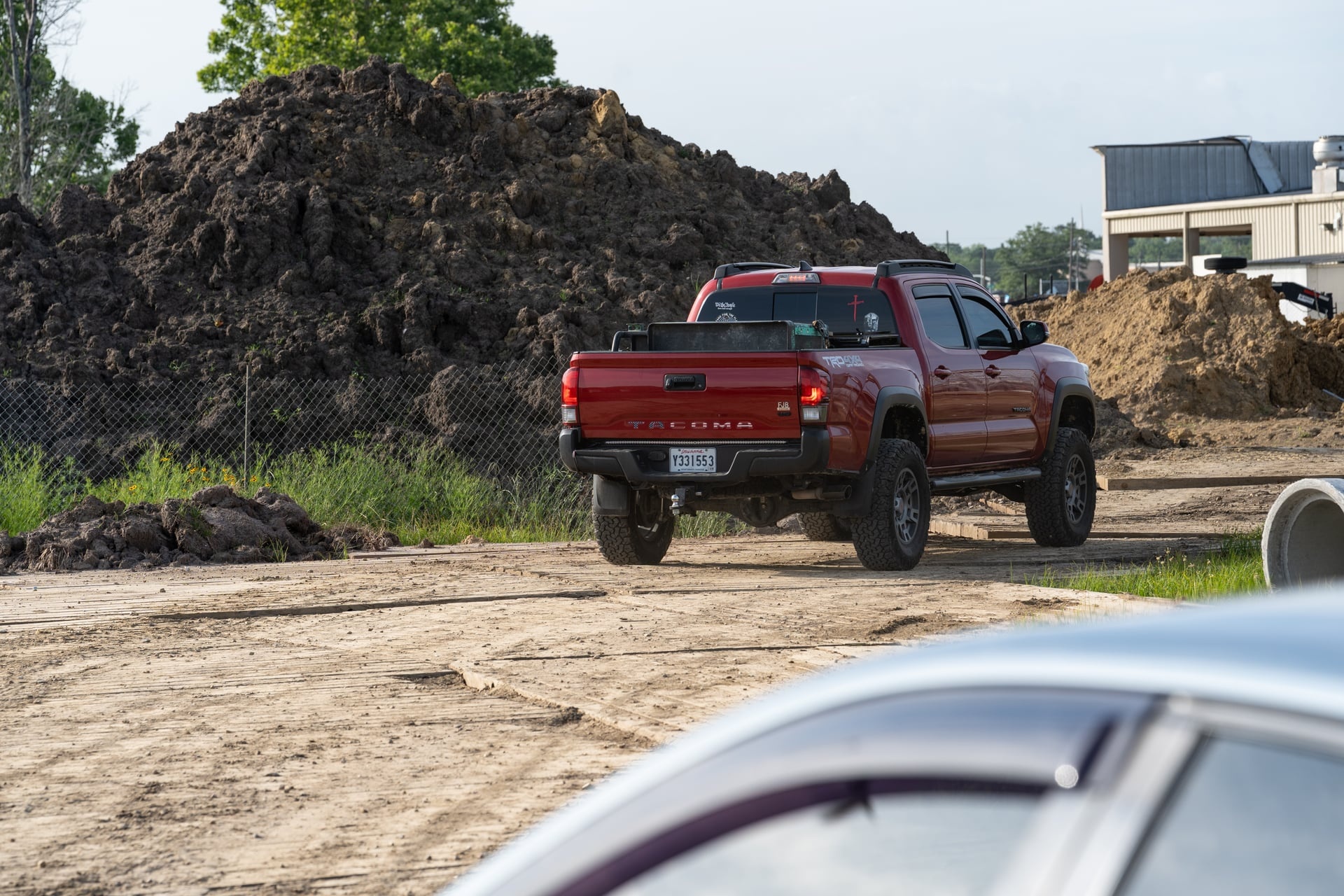
 Ground protection mats can help increase safety and productivity and they often pay for themselves by reducing downtime. This guide explains what ground protection mats are and why they are a critical investment for your next construction project.
During project mobilization, project managers secure the equipment and resources needed once execution begins. The list is long and includes everything from heavy iron to temporary fences to portable restrooms. To set a project up for success, companies should consider adding one more item: ground protection mats.
Ground protection mats, made of hardwood, composite or other durable materials, can help contractors maximize uptime, maintain a good safety record, limit environmental damage and save money. They are easy to install and reposition as site conditions change.
What are ground protection mats and how do they work?
Ground protection mats are durable, portable platforms designed to create temporary roadways and stable work surfaces. They work by distributing the immense weight of heavy equipment and foot traffic over a larger surface area. This prevents the ground below from becoming compacted, rutted, or damaged, ensuring both safety and efficiency on a jobsite.
In practice, ground protection mats serve three core functions on a construction site:
- They create temporary access roads and work surfaces over soft, unstable or uneven ground.
- They protect soil, vegetation, and finished surfaces from rutting, compaction, and damage.
- They support safer movement for workers and equipment.
Benefits of using ground protection mats
- Boosting productivity
Installing mats can increase productivity in several ways, and those gains often outweigh the initial cost. From preventing weather-related delays to creating a more functional worksite, mats ensure your project runs efficiently by keeping crews and equipment moving without interruption.
- Reduced downtime in bad weather
An estimated 45% of construction projects are affected by inclement weather. Muddy conditions after rain, snow or spring melts can stop work for days or weeks. Temporary roads made of mats help crews and equipment move across muddy, swampy, soft, unstable or uneven terrain.
- Protection for stationary machines
Placing mats under machines such as generators and dewatering pumps can help prevent unexpected failures. Mats can level the ground, keep equipment out of mud and reduce the risk of machines sliding on slopes.
- Cleaner, more functional jobsites
Mats create cleaner travel lanes and staging areas, which can make a site more appealing to subcontractors while also helping protect high-value materials from mud and standing water.
- Reduced jobsite maintenance compared with gravel
Using mats instead of gravel can deliver strong return on investment. Parking pads created with mats reduce the effort of raking and cleaning gravel and once removed, mats leave no debris behind.
How mats impact site safety
Ground protection mats are a practical and cost-effective way to establish a safer working environment.
- Stable ground for pedestrians
By covering muddy ground and leveling uneven terrain, mats reduce slip and fall hazards. They also help prevent deep ruts left by dried mud, which can cause workers to trip or roll an ankle. Installing mats under portable restrooms and office trailers is a simple way to improve footing for personnel.
- Stable surfaces for equipment
Mats can help reduce the risk of equipment tip-overs by leveling uneven terrain and stabilizing soft, shifting ground. Crane mats and other heavy-duty mats can also create work platforms for cranes, diggers, boom lifts and other heavy equipment during operation.
- Cleaner getaways for vehicles
Rocks, gravel and mud can get stuck in vehicle tires and end up on local roads. If debris damages road surfaces or cracks windshields, contractors may be held liable. Trackout control mats installed over temporary exits can dislodge debris and collect mud.
How mats protect the environment and support compliance
Mats reduce the environmental impact of construction activities and can support compliance requirements.
Heavy equipment rolling or sitting directly on the ground can compact soil and increase stormwater runoff. Ground protection mats help limit compaction by spreading out pressure from wheels and tracks. They can also support compliance with a stormwater pollution prevention plan, often called SWPPP. Failure to comply with SWPPP requirements can lead to fines or project delays.
Limiting disruption of soil and vegetation can also reduce restoration work at the end of a project and the costs that come with it.
Types of ground protection mats and what they are best for
Most jobsites use a mix of mat types. The right choice depends on ground conditions, equipment weight, traffic patterns and how long the mats will be in place.
Tiber matsm
Timber mats, also called hardwood mats, are a traditional, versatile option for access on level and uneven ground and for heavy equipment, cranes and high-traffic areas. At United Rentals, we offer:
- Bridge mats: Used as decking on temporary bridges to support heavy equipment and vehicles
- Crane mats: Built from dense hardwoods to create stable platforms and roadways for cranes and other heavy machinery
- Cross-laminated timber CLT mats: Lighter than traditional hardwood mats and suited for level terrain, parking pads or rubber-tire access
- Laminated mats, (3-ply and 2-ply): A lighter-weight option for areas with minimal ground saturation that need less intensive support
Composite mats
Composite mats are engineered from durable plastics like HDPE and often provide a lighter-weight, modular alternative to timber. Our inventory includes:
- Light-duty composite mats: Designed for pedestrian traffic, emergency access routes and protecting sensitive ground
- Medium-duty composite mats: Designed for temporary roadways for light-duty vehicles and construction equipment
- Heavy-duty composite non-conductive mats: Built for high-traffic worksites and locations where a non-conductive surface is critical for safety
Specialized matting systems
Certain projects require solutions tailored to specific challenges. United Rentals provides specialized matting systems such as:
- Trackout control mats: Placed at jobsite exits and entrances to remove mud, rocks and debris from tires
- EPZ grounding mats: Galvanized steel grates bonded together to protect crews from electrical step potential and Grade 5 fault currents for work near transmission lines or substations
How to pick the best ground protection mats
Selecting the right matting solution requires a clear assessment of site conditions and use cases.
Assess your terrain and conditions
Before you begin, analyze the landscape and conduct a site visit with a matting partner. Consider weather, seasonal changes and local environmental regulations. A solution for a dry, flat field will differ from what is needed in a wetland or on mountainous terrain.
Define the use case and equipment load
Match mats to what will travel over them and how often. Consider vehicle types, weights, frequency of travel and project duration. A mat that works for lightweight rubber-tire vehicles may fail under heavy tracked equipment.
Avoid common matting mistakes
Key pitfalls to avoid include:
- Using the same mat for every project: Every site is different, so what worked before may not fit current conditions
- Ordering the wrong quantity: Over-ordering wastes money while under-ordering causes delays
- Not considering installation methods: Techniques like leap-frogging can improve efficiency by moving mats from completed areas to active areas
Choosing a matting provider
Choosing the right type of mats and ordering them in the optimal quantity can be challenging. Partnering with an experienced matting provider simplifies planning. Look for a provider that can do the following:
- Help forecast mat quantities by phase and by site zone
- Recommend mat types based on equipment, soil and terrain
- Support delivery, staging and jobsite logistics
- Provide installation, removal and restoration support when needed
Quick FAQs
Are ground protection mats worth the cost?
Yes. Mats can reduce downtime, improve access in wet conditions and lower restoration and maintenance costs.
Do I need one mat type for the whole site?
Many projects use multiple types. Heavy-duty timber mats may be best for crane pads and repeated heavy traffic while lighter composite or laminated options may fit pedestrian routes and lighter-use zones.
What is the biggest mistake teams make with matting?
Treating matting as one decision for the entire site. Most savings come from zoning the jobsite, then matching mat type to risk, loads and ground conditions.
Contact United Rentals to receive a quote or more information about our ground protection mat rentals.